

OUR HISTORY
The 91st Division was originally formed 5 August 1917 during World War I at Camp Lewis, Washington, and was trained and shipped out in time to fight in the trenches in France and Belgium. The 91st’s first campaign (Lorraine 1918) was as a reserve during the St. Mihiel offensive in September 1918, suffering a few casualties from long-range enemy artillery fire. The Division went into the line for the first time for the Meuse-Argonne offensive at 0500 26 September 1918, earing its second campaign streamer (Meuse-Argonne). Although only in line for a short period – 16 days – the soldiers fought hard and maintained their unit cohesion extremely well despite the heavy casualties, when neighboring divisions were losing combat effectiveness. For the final offensive of the war, the 91st was moved to the Belgian front, jumping off 31 October 1918, liberating Belgian towns like Waraghem and Audanarde and crossing the Scheldt River into Germany before the cease-fire was declared 11 November 1918. The men of the division earned five Medals of Honor, dozens each of Distinguished Service Crosses, and Divisional and Corps level commendations, French Legion d’Honneur, French Croix de Guerre, and Belgian Croix de Guerre.
The men of the 91st chose their division’s motto (“Powder River, Let’r Buck!”), patch (the fir tree), and nickname (“Wild West Division”) from the symbols of the American West and, in particular, Wyoming. Reputedly, when the draftees first arrived at Camp Lewis without uniforms, one draftee was still wearing cowboy hat and riding chaps. When the sergeant demanded to know where he was from, the draftee yelled back, “Powder River, Let’r Buck.” It is still the Division’s rallying cry.
The fir tree was chosen as the patch because it represented the entire western states, from which most of the men were drafted. In addition, since over 20,000 patches were needed, it was easy to manufacture with pool table cloth and Christmas tree cookie cutters.
The 91st Infantry Division was reactivated for World War II at Camp White Oregon, 15 August 1942. The 361st Infantry Regiment was the first committed to combat at Anzio and participated in the break out and liberation of Rome. The 362nd and 363rd first experienced combat in the ancient Latin planes around Rome, Pisa, and Florence from May to July 1944. In the tough, close-quarter combat in the North Apennines Mountains, the men of the 91st broke two fortified Nazi defensive lines – the Gothic and Caesar lines. In the fall of 1944, the 91st fought north from Florence, trying to reach Bologna, advancing through the Futa and Il Giogo Passes, anchored on Mt Calvi and Monticelli Ridge, and then fighting through the towns of Monghidoro, Loiano, and Livergnano. In the April 1945, the 91st stormed the last Nazi-held obstacle before Bologna, Mt Adone, and then broke out into the Po Valley, decimating Nazi forces during the ensuing rout. The 91st ended the war in occupation duty along the Italian-Yugoslavia border. The men earned three Presidential Unit Citations, added two more Medal of Honor recipients, 33 Distinguished Service Crosses, and over 450 Silver Stars to the honors earned in World War I.
You can click here to download a PDF file about the Division’s first 100 years.
You can click here to download a PDF file with an article from the SF Sunday Chronicle about the return of the 363rd to San Francisco after WWI.
Below are several links to 91st Division history videos:
91st Infantry Division History
The 91st Division in World War I
91st infantry division italy 1944
91st US INFANTRY DIVISION MEMORIAL (LIVERGNANO DI PIANORO, BOLOGNA, ITALY)
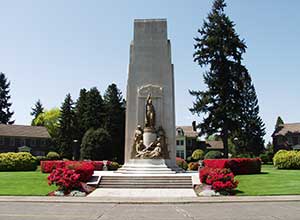
Below are several photos related to the 91st Division history. Click on a photo to enlarge it.